
From auto, refrigerator, and mobile handset makers to real estate firms, companies are tying up with banks to dole out attractive finance schemes and discounts to make buying more affordable.

At the heart of the matter are revenue-share rental agreements that retailers are mooting over fixed-rent contracts that they say are unsustainable, given the revenue loss they've suffered during the lockdown.
Clearly, the domestic market has taken sharp knocks in April, which is likely to be visible in May as well, said analysts tracking the market, as FMCG companies are grappling with improving capacity utilisation and dealing with labour shortage.

'While OTTs are a reality, big film producers will prefer a theatrical release before a digital one.'

Almost 70 per cent of alcohol distribution in India happens through liquor vends or shops, while 30 per cent happens on-premise, that is, in bars, pubs, and hotels.

Radhakishan Damani is the only billionaire to see his wealth grow by around 20% during the lockdown.

Companies from Unilever to Proctor & Gamble, Nestl, Coca-Cola and PepsiCo have all alluded to lockdown challenges in India and the globe as well as the impact it will have on April-June as well as full-year numbers.

Arundhuti Dasgupta on the anxiety and logistical challenges of caring for elderly parents during lockdown, especially if they are ailing and live away from you.

'With doctors going up against a seemingly invincible enemy, often at immense risk to their lives, the myths reveal an interesting relationship between the men of medicine and the rest of humankind,' notes Arundhuti Dasgupta.

Retailers are also demanding that home delivery across all forms of retail should be allowed to ensure a level playing field.

Data from market research agency Nielsen shows that 152 new players entered the hygiene market in March as the lockdown was implemented to contain the spread of the coronavirus disease. The trend is expected to continue, the agency says, as hygiene and health emerge as key themes.
While FMCG companies were not barred from carrying out their operations during the 21-day lockdown, since most manufacture staples and essential products, capacity utilisation remained poor, owing to the restricted movement of raw materials, finished goods, and labour.

'Clearly, the next few months will be very challenging for industry.' 'We are clearly in a phase where recovery is a dream.'

Top companies reported that despite most of them making staples and essential products, movement of raw material, goods and labour remained restricted, impacting sales.

Overcrowding, unsanitary conditions in Asia's largest slum pose big challenges to containment.

News viewership was the biggest gainer during the first full week of lockdown, growing 298 per cent versus the pre-COVID period between January 11 and 31. Ramayana, whose rerun has begun on Doordarshan, was the top-rated show on Saturday and Sunday.

In this lockdown, no matter how many similarities the memory dredges up from past events and associations, there is one thing that has no precedent: The isolation that it has imposed on people, reports Arundhuti Dasgupta.

Cancellation of at least Rs 3,000-crore worth of business has happened in the past few weeks.

'Manthara wants Kaikeyi to make her son Bharat king of Ayodhya, instead of Rama.' 'She fuels hate and mistrust in her queen, much like what many modern-day viziers are doing, whipping up venom and frenzy among an entire nation,' notes Arundhuti Dasgupta.
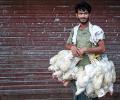
Weak demand from the poultry sector has resulted in a sharp decline in feed prices too, with both soybean and maize prices falling by nearly 25 per cent in the past two months. The poultry market consumes around half of soybean and maize production in India.
 © 2026 Rediff.com - Advertise with us - Disclaimer - Privacy Policy - Sitemap - Feedback - About us - Terms of use - Grievances